No events near you
24 events in USA
Rush
7:30 PM Houston, TX, USToyota CenterToyota CenterTodayHottest event
Rush
7:30 PMDenver, CO, USBall ArenaBall ArenaRush
7:30 PMDenver, CO, USBall ArenaBall ArenaSelling fastRush
7:30 PMSeattle, WA, USClimate Pledge ArenaClimate Pledge ArenaIndigenous Peoples' Day weekendRush
7:30 PMSeattle, WA, USClimate Pledge ArenaClimate Pledge ArenaIndigenous Peoples' DaySelling fastRush
7:30 PMSan Jose, CA, USSAP CenterSAP CenterRush
7:30 PMSan Jose, CA, USSAP CenterSAP CenterRush
7:30 PMSt. Louis, MO, USEnterprise CenterEnterprise CenterSelling fastRush
7:30 PMCincinnati, OH, USHeritage Bank Center (formerly U.S. Bank Arena)Heritage Bank Center (formerly U.S. Bank Arena)Selling fastRush
7:30 PMWashington, DC, USCapital One ArenaCapital One ArenaRush
7:30 PMWashington, DC, USCapital One ArenaCapital One ArenaRush
7:30 PMUncasville, CT, USMohegan Sun Arena at Mohegan Sun Casino & Resort - ComplexMohegan Sun Arena at Mohegan Sun Casino & Resort - ComplexRush
7:30 PMUncasville, CT, USMohegan Sun Arena at Mohegan Sun Casino & Resort - ComplexMohegan Sun Arena at Mohegan Sun Casino & Resort - ComplexRush
7:30 PMDavie, FL, USHard Rock Live at Seminole Hard Rock Hotel & Casino Hollywood - ComplexHard Rock Live at Seminole Hard Rock Hotel & Casino Hollywood - ComplexRush
7:30 PMDavie, FL, USHard Rock Live at Seminole Hard Rock Hotel & Casino Hollywood - ComplexHard Rock Live at Seminole Hard Rock Hotel & Casino Hollywood - ComplexRush
7:30 PMTampa, FL, USBenchmark International Arena (Formerly Amalie Arena)Benchmark International Arena (Formerly Amalie Arena)Rush
7:30 PMTampa, FL, USBenchmark International Arena (Formerly Amalie Arena)Benchmark International Arena (Formerly Amalie Arena)Veterans' DaySelling fastRush
7:30 PMPittsburgh, PA, USPPG Paints ArenaPPG Paints ArenaSelling fastRush
7:30 PMCharlotte, NC, USSpectrum CenterSpectrum CenterRush
7:30 PMCharlotte, NC, USSpectrum CenterSpectrum CenterRush
7:30 PMAtlanta, GA, USState Farm ArenaState Farm ArenaRush
7:30 PMAtlanta, GA, USState Farm ArenaState Farm ArenaRush
7:30 PMGlendale, AZ, USDesert Diamond ArenaDesert Diamond ArenaRush
7:30 PMGlendale, AZ, USDesert Diamond ArenaDesert Diamond Arena
Download the StubHub app
Discover your favourite events with ease



About Rush
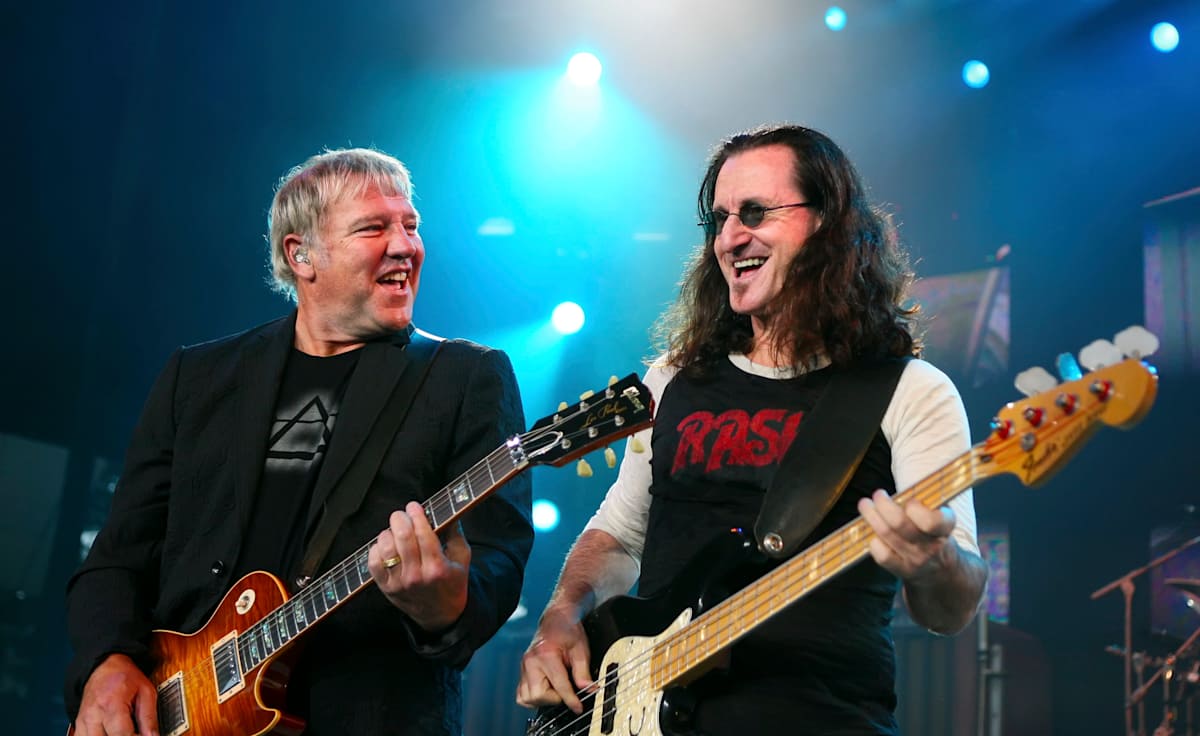
Rush formed in Toronto in 1968, spending their early years on the Ontario high school and bar circuit sharpening a blues-based hard rock sound shaped heavily by Led Zeppelin's debut album. Guitarist Alex Lifeson, drummer John Rutsey, and bassist Jeff Jones founded the group, with Geddy Lee stepping in on bass and lead vocals shortly after, in time for the band's second gig. Once Rush found their own voice, it became one of the most distinctive in rock: virtuosic playing, structurally complex compositions, and lyrics drawn from science fiction, fantasy, and philosophy.
The classic power trio locked into place in July 1974 when drummer Neil Peart joined and took over as primary lyricist, and the lineup of Lee, Lifeson, and Peart held steady for the next four decades. When their label pushed for a more commercial direction, Rush answered with 2112 in 1976, an album anchored by a 20-minute title track in seven sections. It delivered the band's first major commercial success and first double-platinum certification in Canada, and three sold-out nights at Toronto's Massey Hall that June became the live album All the World's a Stage. The commercial peak arrived with Moving Pictures in 1981, which hit No. 1 in Canada and No. 3 on the US Billboard 200 on its way to quintuple platinum status in both countries, with "Tom Sawyer" and "Limelight" becoming career-defining singles. Rush kept evolving from there, moving through a synthesizer-heavy era in the 1980s that produced "Subdivisions" and their biggest hit single, "New World Man," before returning to guitar-driven rock in the 1990s. Across 19 studio albums they sold more than 43 million records worldwide, and their run of consecutive gold and platinum studio albums in the US ranks third among rock bands, behind only The Beatles and The Rolling Stones. In 2026, Lee and Lifeson brought Rush back to the stage, reuniting the band for its first tour in more than a decade.
A Rush show was a feat of precision. The trio recreated the full complexity of their albums live without backing tracks or extra players on stage, each member triggering samplers, pedals, and keyboards mid-song. Neil Peart's drum solos, a framework of routines connected by improvisation, were a staple of every performance, and the stage props ran from washing machines and vintage popcorn poppers to inflatable rabbits. That reputation for live excellence is a big part of why Rush tickets stayed in demand across five decades of touring, as the band's reach grew from Ontario high school gyms to a headlining crowd of 60,000 in São Paulo in 2002.
Who are the members of Rush?
What are Rush's most popular songs?
- Tom Sawyer, the lead track from Moving Pictures and the band's best-known song
- Limelight, the second Moving Pictures single and a No. 4 hit on the US Album Rock Tracks chart
- The Spirit of Radio and Freewill, the Permanent Waves singles that opened the 1980s
- Closer to the Heart, the band's first UK chart hit in 1977
- Subdivisions and New World Man, the Signals-era singles; New World Man became the biggest hit single of the band's career
- Working Man, the debut-album track that broke Rush in the US after Cleveland radio put it in rotation
- 2112, the seven-part, 20-minute suite that anchors the album of the same name
- Fly by Night, the title track from the first album recorded with Peart
What awards has Rush won?
- Rock and Roll Hall of Fame: inducted in 2013, 15 years after first becoming eligible
- Juno Awards: ten wins across their career, plus the 2015 Allan Waters Humanitarian Award for their charitable work
- Grammy Awards: seven nominations across their career
- Canadian honors: Canadian Music Hall of Fame (1994), Canadian Songwriters Hall of Fame (2010, recognizing five songs including Tom Sawyer and Limelight), and Officers of the Order of Canada (1996)
- Lifetime and live music honors: the Governor General's Performing Arts Award for Lifetime Artistic Achievement (2012), Billboard's 2010 Legends of Live award, a 2010 star on the Hollywood Walk of Fame, and the 2009 SOCAN International Achievement Award
What is Rush's fan base like?
Where can I buy Rush tickets?
How do I sell Rush tickets?
Are tickets guaranteed on StubHub?
It's this guarantee that makes us the most trusted ticket marketplace by fans where you can buy and sell with 100% confidence. Our FanProtect Guarantee offers buyers four key benefits:
- You will get your tickets in time for the event.
- Your order guarantees a ticket valid for entry into the event.
- If there is an issue with your order, we'll make it right with comparable or better tickets or your money back.
- If your event is canceled and not rescheduled, you'll receive 120% credit or provide the option of a full refund.
Can you buy tickets on StubHub without an account?
How long does it take to get my StubHub tickets after purchase?
Why can't I see my seats on StubHub?
Will StubHub seat you together?
What happens if my event Is canceled?
What happens if my event Is rescheduled?
Rush event dates
Rush events by city
Amsterdam
Netherlands · 1 events
Atlanta
Georgia · 2 events
Basel
Basel-City · 1 events
Belo Horizonte
MG · 1 events
Berlin
Germany · 1 events
Brasília
DF · 1 events
Buenos Aires
Argentina · 1 events
Charlotte
North Carolina · 2 events
Cincinnati
Ohio · 1 events
Cologne
Germany · 1 events
Copenhagen
Denmark · 1 events
Curitiba
PR · 1 events
Davie
Florida · 2 events
Denver
Colorado · 2 events
Edmonton
Alberta · 2 events
Fornebu
Norway · 1 events
Glasgow
Glasgow City · 2 events
Glendale
Arizona · 2 events
Hamburg
Germany · 1 events
Helsinki
Finland · 1 events
Houston
Texas · 1 events
Krakow
Poland · 1 events
London
Greater London · 3 events
Manchester
Greater Manchester · 2 events
Milan
Lombardia · 1 events
München
Germany · 1 events
NANTERRE
Ile-de-France · 1 events
Pittsburgh
Pennsylvania · 1 events
Rio de Janeiro
Rio de Janeiro · 1 events
San Jose
California · 2 events
Santiago de Chile
Chile · 2 events
São Paulo
SP · 3 events
Seattle
Washington · 2 events
St. Louis
Missouri · 1 events
Stockholm
Sweden · 1 events
Stuttgart
Germany · 1 events
Tampa
Florida · 2 events
Uncasville
Connecticut · 2 events
Vancouver
British Columbia · 2 events
Washington
DC · 2 events